
Protein – Overview
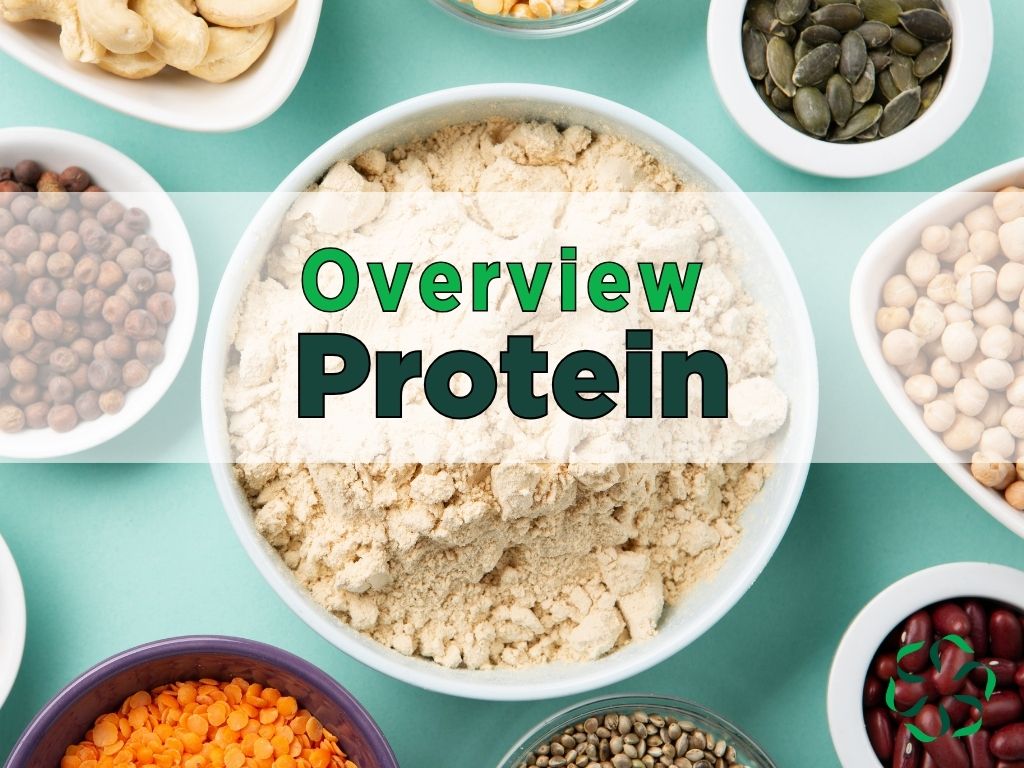
From protein powders and high-protein snacks to the latest “protein maxxing” trend, protein is having a moment. But what actually is protein? Do different protein sources matter? And do we really need as much protein as social media suggests?
Top Takeaways:
- Protein is essential, but more is not always better.
- Protein needs vary from person to person.
- Different protein sources have different benefits, but all can help people meet their overall nutritional needs.
- Protein powders and supplements can be helpful tools, but they are not required and should be verified for quality by a 3rd party.
- The best diet focuses on balance, not maximizing one nutrient.
What is protein?
Protein is one of the three main macronutrients our bodies need, alongside carbohydrates and fats. It plays an important role in many biological processes that keep our bodies functioning.
Proteins are made from smaller building blocks called amino acids. When we eat foods containing protein, our digestive system breaks those proteins down into amino acids, which our bodies can then use for important functions, including:
- Building and repairing tissues
- Supporting muscle maintenance
- Creating enzymes and hormones
- Supporting immune function
- Helping the body grow and recover
There are 20 different amino acids that the body uses to make proteins. Nine of these are considered “essential” amino acids because our bodies cannot produce them on their own, meaning we need to get them through the foods we eat.
Why are people talking about protein so much?
Protein has long been discussed in sports nutrition because of its role in muscle growth and recovery. More recently, protein has become a broader wellness trend, gaining momentum on social media platforms.
Some people are intentionally increasing protein because it can:
- Help support feelings of fullness
- Help maintain muscle, especially when combined with resistance training
- Support nutritional needs during certain life stages
However, more protein does not automatically mean better health.
How much protein do we need?
Protein needs vary based on factors like:
- Age
- Body size
- Activity level
- Health status
- Fitness goals
Someone training intensely may have different protein needs than someone with a lower activity level.
While protein is important, our bodies also need carbohydrates, fats, fiber, vitamins, minerals, and other nutrients found across a varied diet.
Since protein needs are not the same for everyone, you can use evidence-based tools to better understand your individual nutrient needs.
The USDA’s Dietary Reference Intake (DRI) Calculator estimates daily nutrient recommendations, including protein, using information such as your height, weight, age, and activity level.
It’s important to remember these recommendations are general guidelines for healthy individuals. Athletes, people with certain health conditions, and people with specific nutrition goals may have different protein needs.
But, for most people, the goal should not be to consume as much protein as possible. Rather, we should focus on consuming enough protein while maintaining an overall balanced diet.
What happens if I have too much protein?
For most healthy people, eating a higher-protein diet causes no harm. However, eating more protein than your body needs does not mean your body will continue to build more muscle or gain additional benefits. Once your protein needs are met, excess protein can be used for energy or stored.
Additionally, focusing too heavily on protein may unintentionally crowd out other important foods and nutrients.
For example, replacing fruits, vegetables, whole grains, and other fiber-rich foods with only high-protein options may make it harder to get enough fiber, vitamins, and minerals, which are needed to maintain health.
People with specific health conditions, particularly kidney disease, may need to manage their protein intake under the guidance of a healthcare professional.
Are some proteins better than others? What kinds of proteins are there?
One reason we see so many different protein products on the market is that protein can come from a wide variety of sources. And, not every protein source contains all nine essential amino acids in sufficient quantities.
Animal-based protein sources like meat, eggs, fish, and dairy are generally considered complete proteins because they contain all nine essential amino acids in proportions our bodies can readily use.
Many plant-based proteins are lower in one or more essential amino acids. For example, pea protein is low in methionine, while other plant proteins may be limited in lysine or tryptophan.
Common plant-based protein sources include
- Soybeans
- Peas
- Potatoes
- Mung beans
- Lentils
- Other legumes
Soy is a notable exception among plant proteins because it contains all nine essential amino acids in useful amounts.
Proteins also differ in digestibility. Scientists use measures like the Digestible Indispensable Amino Acid Score (DIAAS) to assess how much of a protein your body can actually absorb and use. Animal proteins and soy tend to score well on the scale, while other plant proteins vary.
That said, these differences matter most if you’re relying heavily on a single protein source.
For most people, eating a varied diet, the nutritional gaps in any one protein are easily compensated for by the others they consume. Each source also brings its own nutritional extras like fiber, micronutrients, and healthy fats that matter beyond protein content.
A diverse, well-rounded diet is the easiest way to meet your nutrient needs.
What about plant-based protein ingredients?
As consumer interest in plant-based foods has grown, food manufacturers have explored different plant proteins.
Soy protein
Soy protein is one of the most widely used plant proteins. It contains all nine essential amino acids, making it a complete protein source. Soy ingredients can be found in a variety of foods, from traditional soy products to newer plant-based alternatives.
Pea protein
Pea protein has become increasingly common in protein powders, bars, and plant-based foods. Food manufacturers often use pea protein for its nutritional and functional properties, which are useful across many food applications.
Potato protein
While many people think of potatoes primarily as a source of carbohydrates, potatoes also contain protein. Potato protein ingredients are created by separating and concentrating the protein naturally present in potatoes.
Mung bean protein
Mung beans have been consumed around the world for centuries. More recently, mung bean protein has gained attention as an ingredient in some plant-based foods.
Like other plant proteins, it offers manufacturers an option for creating foods with varied textures and nutritional profiles.
Are protein powders and protein ingredients safe?
Protein-containing foods are generally safe to consume in typical quantities.
Protein ingredients added to foods, such as pea or soy protein in a veggie burger, undergo a review process before reaching the market. Manufacturers must establish that these ingredients are safe, often through the FDA’s GRAS (Generally Recognized as Safe) process.
However, protein powders sold as dietary supplements work differently. Under the Dietary Supplement Health and Education Act (DSHEA), supplement manufacturers do not need FDA pre-market approval, which means a product can be sold before the FDA has reviewed or tested it.
While the FDA does require manufacturers to follow Good Manufacturing Practices (GMPs) and can take action against unsafe or mislabeled products after they’re on the market, the burden of proof is on the FDA, not the manufacturer.
As a result, protein powder quality can vary. Independent testing has found that some products contain contaminants like heavy metals or do not match their labeled ingredients.
To reduce that risk, look for powders that have been verified by a third-party organization like NSF International or U.S. Pharmacopeia (USP), which independently test products for purity and label accuracy.
The good news.
Protein is essential for your health, and getting enough matters. Whether you get your protein from traditional foods or occasional protein supplements, the most important thing you can do is eat a healthy diet built on balance, variety, and meeting your individual needs.
If you have any questions about ingredients or ideas for a blog post, please send us an email or submit your idea to us at go.msu.edu/cris-idea.
Sources and further reading.
Food and Agriculture Organization of the United Nations. (2013). Dietary protein quality evaluation in human nutrition: Report of an FAO expert consultation (FAO Food and Nutrition Paper 92). FAO. https://www.fao.org/ag/humannutrition/35978-02317b979a686a57aa4593304ffc17f06.pdf
Ko, G. J., Obi, Y., Tortorici, A. R., & Kalantar-Zadeh, K. (2017). Dietary protein intake and chronic kidney disease. Current Opinion in Clinical Nutrition and Metabolic Care, 20(1), 77–85. https://doi.org/10.1097/MCO.0000000000000342
National Academies of Sciences, Engineering, and Medicine. (2005). Dietary Reference Intakes for Energy, Carbohydrate, Fiber, Fat, Fatty Acids, Cholesterol, Protein, and Amino Acids. National Academies Press. https://doi.org/10.17226/10490