
Packaging – Plastic Wrap
Updated: April 7, 2026
Plastic wrap is one of the most commonly used tools for food storage, but many people wonder what food-safe plastic wrap is made of and whether it is safe to use.
In this post, we break down how plastic wrap works, the materials used (like low-density polyethylene), how it’s regulated by the FDA, and what the science says about its safety in everyday use.
Top Takeaways:
- Plastic wraps help preserve food by limiting exposure to air, moisture changes, and contamination, which reduces spoilage and food waste.
- Most household plastic wrap is made from low-density polyethylene (LDPE), a widely used and well-studied food-contact material.
- Food-contact materials are regulated by the FDA through a premarket safety review, including migration testing and risk assessment.
- Current research is exploring emerging topics like packaging sustainability, biofilms, and potential migration at very low levels, but safety evaluations consider real-world exposure.
What are food-safe plastic wraps, and what do they do?
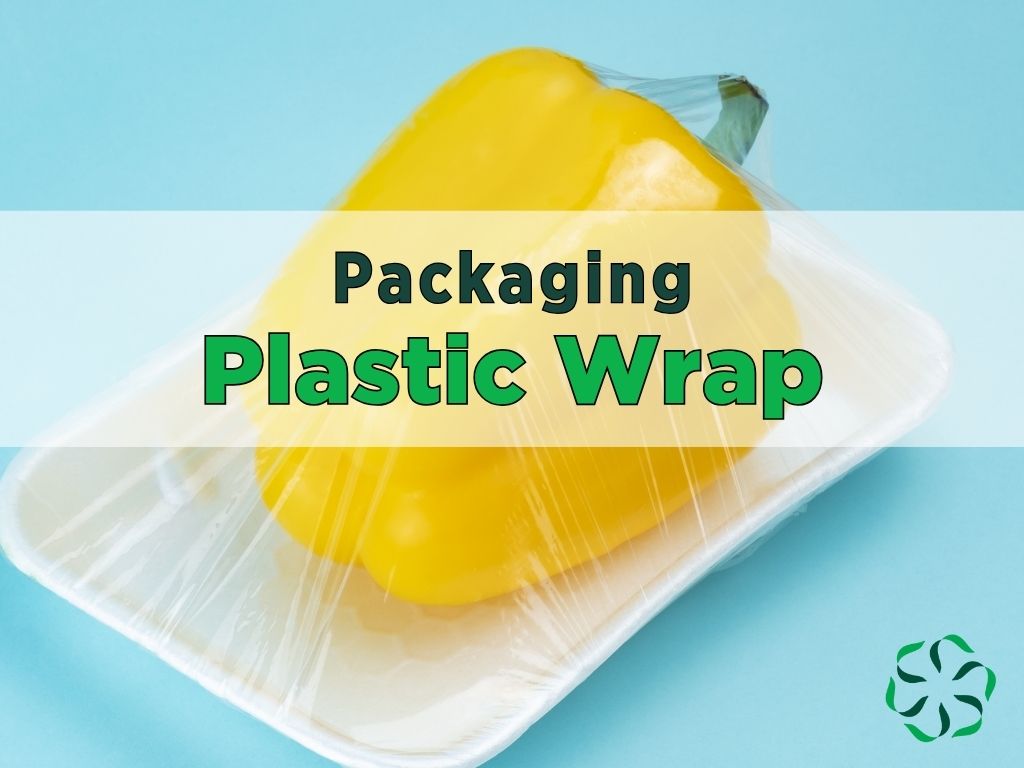
Plastic wraps are typically clear or lightly colored materials designed to cling to themselves and to food containers, forming a protective seal.
This seal plays an important role in keeping food fresh. By limiting exposure to air, plastic wrap helps slow oxidation and spoilage, prevents foods from drying out or absorbing excess moisture, and helps contain odors.
In both household and industrial settings, plastic wraps support food preservation and safe transportation, which helps extend shelf life and reduce food waste.
What are food-safe plastic wraps made of?
There are several types of food-safe plastic wraps, but the most common material used in household plastic wrap today is low-density polyethylene (LDPE).
In the past, some plastic wraps were made from polyvinylidene chloride (PVDC). However, many manufacturers have phased out PVDC due to environmental considerations and concerns about the potential for certain additives (like plasticizers) to migrate into food.
While PVDC may still be used in some specialized food packaging, it is typically combined with other materials that enhance safety and performance.
What is low-density polyethylene (LDPE)?
Low-density polyethylene is a flexible thermoplastic used in a wide range of everyday products, including plastic wraps, food containers, lids, and packaging films.
Its flexibility and durability make it well-suited for creating tight seals that help protect food.
Do manufacturers add other ingredients to plastic wrap?
In some industrial applications, manufacturers may incorporate additional materials such as biofilms into LDPE packaging to enhance preservation, particularly for specific food products.
However, typical plastic wraps used in the home are simpler and may only include additives that help the material cling effectively. They generally do not include more complex preservation technologies.
Is plastic wrap regulated?
Yes. In the United States, the Food and Drug Administration (FDA) regulates materials that come into contact with food through a premarket notification process.
This process requires manufacturers to submit data demonstrating that the material is safe for its intended use. That includes:
- Testing for potential migration of substances into food
- Measuring exposure levels (often in parts per million or billion)
- Conducting risk assessments to determine safety margins
As with all food-contact materials, safety is based on both hazard and exposure, which means that even if a substance can be detected at very low levels, those levels must be evaluated in the context of real-world use to determine whether they are meaningful to human health.
Is low-density polyethylene (LDPE) microwave safe?
Guidance from the United States Department of Agriculture (USDA) recommends following the manufacturer’s instructions when using plastic wrap in the microwave.
As a precaution, it is generally advised to avoid direct contact between plastic wrap and food during heating unless the product is specifically labeled for that use.
Are there new or emerging concerns on plastic wraps?
As with many food-contact materials, research is ongoing. Areas of current scientific interest include:
- The use of nanomaterials or biofilms in advanced packaging
- The potential for very low-level migration of substances into food
- Environmental and sustainability considerations
While concerns about chemicals in plastics often focus on the presence of substances, safety evaluations focus on exposure levels and whether those levels are sufficient to pose a significant health risk.
It’s also important to distinguish between different issues. For example, plastic wrap is not considered a primary source of microplastics exposure in the same way that environmental plastic degradation is. These are separate scientific questions with different exposure pathways.
These emerging topics and how to communicate them clearly have been an area of focus for CRIS. At our 2021 Science Symposium, we brought together experts to explore how evolving science, risk assessment, and public perception intersect in ingredient and packaging safety.
The good news.
Plastic wraps play a significant role in keeping food fresh and safe in our homes and throughout the food supply chain. By helping prevent spoilage and contamination, they reduce food waste and support food safety from production to consumption. And because these materials are evaluated using exposure-based safety assessments, their use is grounded in a strong scientific and regulatory framework.
If you have any questions about ingredients or ideas for a blog post, please send us an email or submit your idea to us at go.msu.edu/cris-idea.
Citations and further reading.
Auras, R., Lim, L.-T., Selke, S. E. M., & Tsuji, H. (Eds.). (2020). Polymer packaging: Materials, processing, and applications (Chapter). Elsevier.
https://doi.org/10.1016/B978-0-12-823381-8.00016-8
Castle, L. (2011). Migration from food packaging materials. In Food and beverage packaging technology (pp. 287–314). Woodhead Publishing.
https://doi.org/10.1533/9780857095701.2.287
Center for Research on Ingredient Safety. (2021). 2021 annual meeting.
https://cris.msu.edu/about-cris/annual-meetings/2021-annual-meeting/
Center for Research on Ingredient Safety. Risk: Exploring the risk assessment process.
https://cris.msu.edu/news/risk/risk-exploring-the-risk-assessment-process/
Center for Research on Ingredient Safety. Trace contaminants and residues in packaging.
https://cris.msu.edu/news/trace-contaminants-residues/trace-contaminants-residues-packaging/
ScienceDirect. Polyvinylidene chloride.
https://www.sciencedirect.com/topics/chemical-engineering/polyvinylidene-chloride
U.S. Department of Agriculture, Food Safety and Inspection Service. Microwave ovens and food safety.
https://www.fsis.usda.gov/food-safety/safe-food-handling-and-preparation/food-safety-basics/cooking-microwave-ovens
U.S. Food and Drug Administration. (2024). Packaging & food contact substances (FCS).
https://www.fda.gov/food/food-ingredients-packaging/packaging-food-contact-substances-fcs
The Japan Society for Food Science and Technology. (2017). Food Science and Technology Research, 23(6), 827–836.
https://www.jstage.jst.go.jp/article/fstr/23/6/23_827/_article