
In the news – Polyvinyl Alcohol
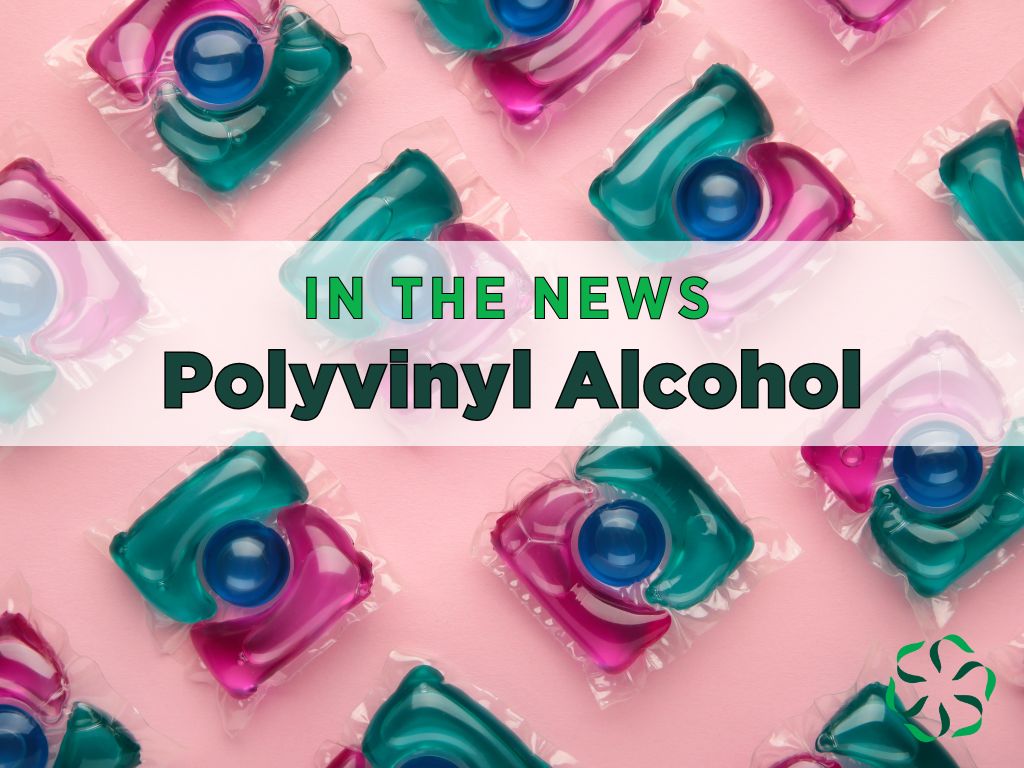
The weight of evidence: Why detergent-grade PVA is safe for people & the environment
Recently, we’ve seen folks in the media raise concerns about detergent-grade polyvinyl alcohol (PVA) and potential human and environmental safety issues surrounding the compound’s use in dishwasher and laundry pods. In this post, we explore the evidence and safety around dishwasher pods.
Top Takeaways:
- Detergent-grade PVA does not contribute to microplastics. It’s specifically engineered to dissolve fully in water and biodegrade under normal wastewater treatment conditions.
- Detergent-grade PVA is safe and does not accumulate in the body. The current weight of evidence shows detergent-grade PVA is safe when used as intended and directed.
- Detergent-grade PVA pods offer measurable sustainability and performance benefits. Their concentrated formulas, encased in lightweight, dissolvable PVA films, reduce packaging waste, lower transportation emissions, and use less water than traditional liquid detergents or handwashing.
- Follow the weight of evidence. Viral claims often misrepresent lab studies and don’t reflect real-world exposures; the weight of evidence consistently shows detergent-grade PVA pods are safe when used as directed.
What is polyvinyl alcohol (PVA)?
Polyvinyl alcohol (PVA), designed for pod use, is a water-soluble synthetic polymer. Unlike other polymers designed for use cases such as polyethylene (used in grocery bags) or PET (used in bottles), PVA used in detergent pods is specifically engineered to dissolve in water rather than fragment into long-lasting microplastics.
- PVA films are designed to be sturdy enough to hold detergent until use, but quickly dissolve when exposed to water.
- Once dissolved, the remaining molecules are dispersed in water and are not solid microplastics.
Plastic is often used as a catch-all term for many different polymers, which can cause confusion. As we explain in What’s Plastic?, not all polymers behave the same, and PVA is a clear example of one that breaks down instead of persisting.
Does PVA break down after we use it? Or, does PVA form microplastics?
The weight of evidence tells us that PVA designed for use in detergents and similar products doesn’t create microplastics when used as directed.
We know that PVA designed for pod use is:
- Biodegradable under treatment plant conditions: Wastewater treatment facilities contain microbes that degrade detergent-grade PVA. Controlled studies found it was readily biodegradable under these conditions.
- Formulated for use case: There are various types of PVAs designed for different purposes. As highlighted in Plastic & Polymer-Based Packaging, not all polymers are built to biodegrade. However, PVAs designed for detergents are specifically crafted to break down in wastewater treatment systems.
Does PVA accumulate in the body?
The current weight of evidence suggests that PVA does not accumulate in human tissues.
- Low potential for bioaccumulation: Because it is water-soluble, PVA is more likely to be excreted than stored in fatty tissue.
- No detection in studies: Researchers did not detect detergent-grade PVA in human tissue samples. However, other types of PVA (not detergent-grade) were found in some tissues at negligible or very low levels that are well below thresholds of concern and do not impact human health. It’s important to remember that PVA isn’t a single substance but a family of different polymers. The PVA type determines how the material behaves, including how easily it dissolves, how flexible or strong it is, and how biodegradable it becomes. Detergent-grade PVA will behave differently from other PVA materials in the same family.
Why is there confusion about PVAs used in detergent pods?
Concerns often arise because:
- Plastic is a broad term. PVA gets grouped with plastics and microplastics even though it behaves differently.
- Real-world variability. While wastewater systems break down PVA, performance may differ depending on conditions like temperature and microbial communities, which may impact smaller-scale studies.
- Viral claims add noise. A 2023 paper on dishwasher detergents and rinse aids has been cited in viral videos claiming pods cause “leaky gut.” However, the study used colorectal cancer cells (not healthy gut tissue), lacked immune cells to measure inflammation, and relied on detergent concentrations hundreds of times higher than any real-world exposure. These findings don’t translate to normal household use.
As we note in Science vs. Sensation: Dishwasher Detergent Safety, many detergent safety concerns gain traction when worst-case lab scenarios are misrepresented as everyday risk.
Are there benefits to using detergent pods?
Detergent pods offer real sustainability and performance benefits:
- Reduce water and energy use compared to handwashing.
- Use concentrated detergents in degradable PVA films that are lighter to transport.
- Enable more potent formulations through separate compartments that release ingredients at the optimal stage of the wash cycle.
Learn more about polyvinyl alcohol (PVA).
For a deeper dive into the science, safety, and regulation of detergent-grade PVA, visit our explainer: Trending: Polyvinyl Alcohol.
The good news.
Detergent-grade PVA is designed to dissolve fully in water and biodegrade in wastewater systems, meaning it doesn’t persist as microplastics or accumulate in the body. Pods also bring environmental benefits by reducing packaging waste, transport emissions, and water and energy use compared to traditional washing.
If you have any questions about ingredients or ideas for a blog post, please send us an email or submit your idea to us at go.msu.edu/cris-idea.